Shot, meet Chaser: Hollywood’s AI betrayal comes to life in Tilly Norwood
- Sep 30, 2025
- 5 min read
You thought the strikes were about wages and likeness rights? Idiots! Writers, actors, producers, and even the unions themselves all played along with the decoy. While they screamed over scraps, Hollywood quietly opened the door to AI and sold out the future...
In a glittering panel at the Zurich Film Festival earlier this month, an unusual figure stepped into the spotlight - Tilly Norwood, an AI-generated “actress” created by the studio Xicoia. Described by producer Eline van der Velden as a potential “next Scarlett Johansson,” Norwood has already drawn interest from multiple talent agents, signaling a bold new chapter for artificial intelligence in entertainment. This debut comes less than 2 years after the seismic 2023 strikes by the WGA and SAG-AFTRA, which brought Hollywood production to a standstill for almost 7 months. While headlines at the time focused on ‘wage increases’ and ‘residuals from streaming services’, a closer examination reveals that AI governance was at the heart of the labor unrest and the true battle over control of creative tools that both unions fought fiercely, only to secure agreements critics argue fell short of comprehensive safeguards.
The dual strikes, which began in May 2023 for WGA members and July 2023 for SAG-AFTRA performers, marked the first joint work stoppage in over 6 decades, halting major film and TV productions for nearly 7 months combined. Public discourse often centered on demands for better pay in an era dominated by streaming platforms, where traditional residuals from reruns and syndication have eroded. However, union leaders emphasized from the outset that artificial intelligence posed an existential threat to their professions.
For the WGA, representing over 11,000 film and TV writers, the strike’s AI-related proposals were non-negotiable. The guild sought to prohibit the use of AI to generate or rewrite “literary material”, defined as scripts, treatments, and outlines and to bar the exploitation of writers’ existing works to train AI models without consent and compensation. WGA West Executive Director David Goodman highlighted in negotiations that AI could automate scriptwriting tasks, potentially displacing entry-level writers and devaluing human creativity.
SAG-AFTRA’s demands echoed these concerns but focused on performers. The union pushed for explicit consent and fair compensation whenever an actor’s image, likeness, or voice is used to create digital replicas via AI, including prohibitions on using such replicas to undermine performers’ employment opportunities. SAG-AFTRA National Executive Director Duncan Crabtree-Ireland warned that without these protections, studios could generate endless variations of background actors or even lead roles from a single scan, rendering thousands jobless. These provisions were prioritized alongside economic issues, but AI emerged as the “red line” that extended the strike beyond initial expectations.
The strikes’ duration, which was 148 days for WGA and 118 for SAG-AFTRA, underscored the intensity of the AI debate. Production on high profile projects like Deadpool 3 and Stranger Things Season 5 ground to a halt, costing the industry an estimated $5 Billion. Yet, as negotiations dragged into late 2023, both sides grappled with the technology’s rapid evolution, from tools like OpenAI’s ChatGPT to deepfake software capable of mimicking performances with eerie accuracy.
The WGA reached a tentative agreement on September 25, 2023, ending its strike after 146 days, the second longest in guild history. The resulting Minimum Basic Agreement included several AI specific provisions hailed as “groundbreaking” by the union. Key elements required that AI-generated material could not be considered “source material” for compensation purposes, preventing studios from crediting machines over human writers. Additionally, companies were barred from using writers’ covered works to train AI without negotiation, with the guild reserving the right to challenge such uses under existing contract terms or copyright law.
SAG-AFTRA followed suit on November 9, 2023, with a tentative deal after 118 days. The agreement established consent requirements for creating and using “digital replicas” of performers, mandating disclosure, negotiation, and compensation for any such use. It also prohibited AI from replicating performers in a way that would affect their employment, and included equity provisions for hair, makeup, and background actors, issues intertwined with AI’s potential to automate these roles.
Both contracts delivered wage hikes, with 7% for WGA and tiered increases up to 7% for SAG-AFTRA along with improved streaming residuals, which some viewed as the “few more bucks” that tipped the scales. However, the AI language was deliberately side-lettered as a “living document,” allowing for future amendments as technology advances. Critics, including some union members, argued these protections were reactive rather than proactive, leaving loopholes for non-union productions or emerging AI applications like fully synthetic characters. The deals were ratified overwhelmingly with 97.9% for WGA and 78% for SAG-AFTRA…but the focus on immediate economic relief raised questions about longterm AI containment.
Fast forward to September 2025, and the industry has seen AI’s integration accelerate despite the strikes’ guardrails. Tools powered by generative AI now assist in storyboarding, visual effects, and even script polishing on major releases, with 2 2025 Oscar Best Picture nominees incorporating AI elements in production. A separate SAG-AFTRA strike over video game voice acting, which began in 2024 and resolved in July 2025, further highlighted unresolved AI tensions, as developers sought to use digital replicas without adequate protections.
Enter Tilly Norwood, the stark embodiment of these evolving dynamics. Unveiled at the Zurich Summit on September 20, 2025, Norwood is Xicoia’s first fully AI-synthesized talent, designed with photorealistic features and adaptable performances. Van der Velden, an actor and AI innovator, announced during the event that agents were “circling” Norwood, with plans for her to sign with a major agency in the coming months. The studio positions her as a cost-effective alternative for roles requiring consistency across global shoots or high risk stunts, explicitly aiming to position her alongside human stars like Johansson.
The reveal has ignited backlash. Emily Blunt, mid-interview at a separate event, expressed shock upon learning of Norwood’s emergence, questioning the ethics of AI supplanting human performers. Online reactions have been swift and polarized, with #BoycottAI trending on social platforms and calls for stricter enforcement of SAG-AFTRA’s digital replica rules. Proponents, however, argue that Norwood complies with existing agreements, as she is a novel creation not derived from any performer’s likeness. This distinction, which is synthetic from scratch VERSUS replica exposes the real potential gap in the strike settlements, where the focus was on protecting existing talent rather than regulating entirely new AI entities.
As Hollywood navigates this AI frontier, the strikes stand as a pivotal, if imperfect, milestone. They secured foundational protections that have influenced global labor discussions on automation, from tech unions to creative industries worldwide. Yet, with innovations like Norwood blurring the lines between code and cast, the industry faces renewed pressure to revisit those accords. Ongoing SAG-AFTRA initiatives, such as the 2024 “AI Goes to Hollywood” panel series, underscore the fight’s continuation. For writers, actors, and crews alike, the message is clear in that the battle for control over AI is far from over, and the next script may well be written by the machines they sought to rein in.
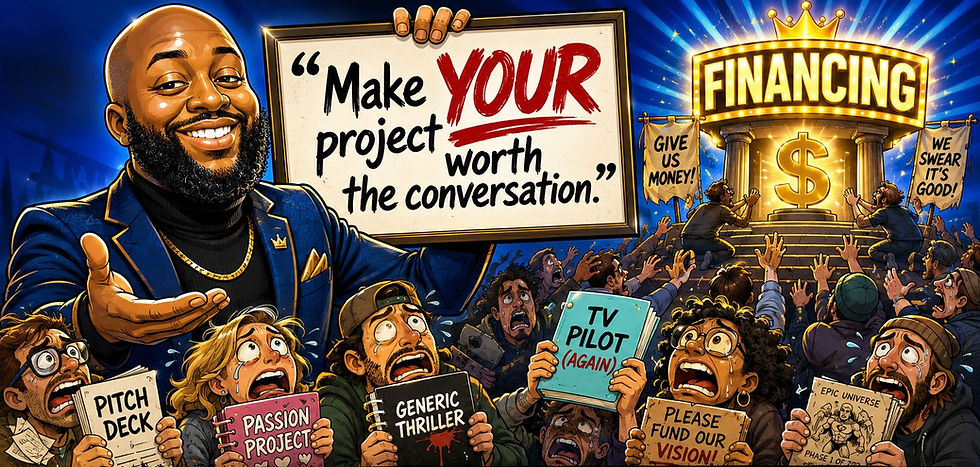
Unlike tech, finance, or healthcare, where AI’s role has been confronted openly and integrated with some measure of transparency, Hollywood chose the opposite path. It let the strikes drag on, postured in public about protecting labor, and then quietly positioned itself to adopt the very tools it claimed to resist. In typical fashion, the studio system treated disruption as another chance to game the optics, the unions settled for quick dollars over long-term protections, and the independent world still insists “art” is a financing strategy. Investors, watching the sleight of hand, are not fooled. They are reallocating capital elsewhere, leaving Hollywood exposed as both complacent and complicit in its own unraveling.
Hollywood has become the world’s most expensive illusion, still selling dreams while sleepwalking into obsolescence.


Comments